
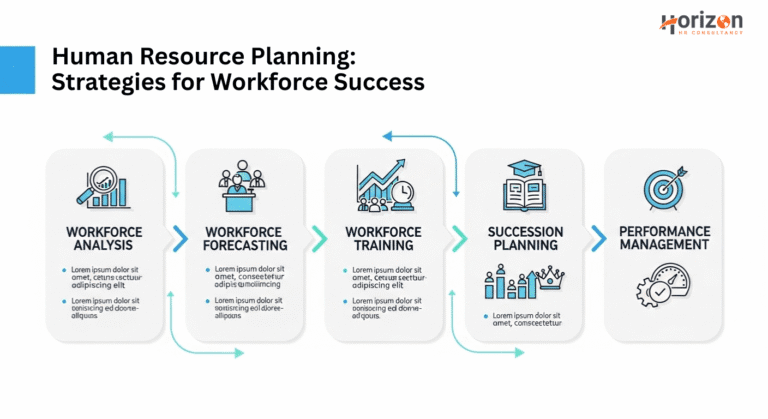
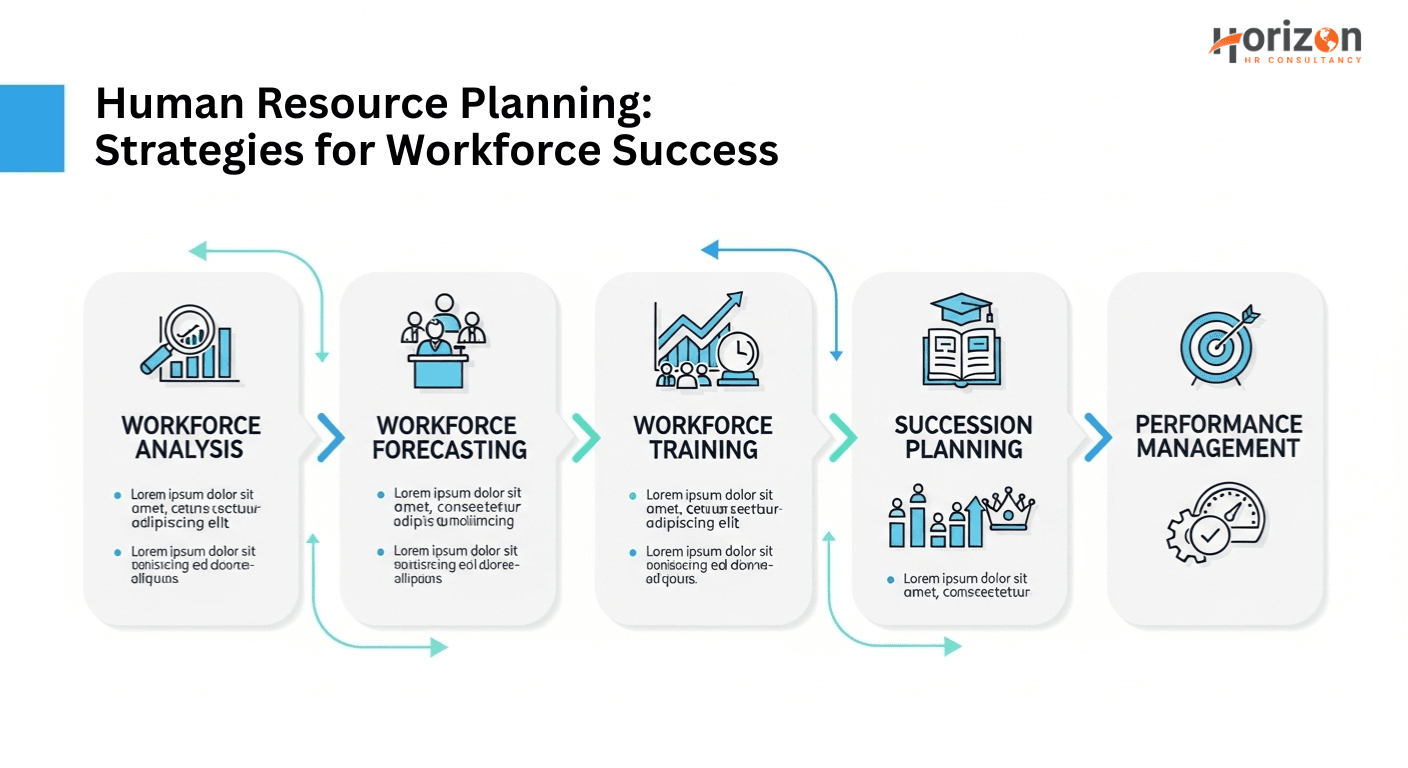
The Human Resource Planning (HRP) process as a forerunner of an organization’s human resources within a planning framework is one of the most important components of business management. The objective of this process is forecasting the demand and figuring out optimal human resources management.
Unpredictable and rapid developments such as information technology breakthroughs and shifts within the business climate make it ever more diverse and complicated. Without proper Human Resource Planning an organization is most likely to ignore these developments and fail to meet their goals. Strategic Human Resource Planning helps an organization create a strategy that aligns the organization’s productivity and goals balanced with an increase in employee satisfaction.
Importance of Human Resource Planning

Predicting and adjusting to business workforce requirements is of utmost importance to the organization.
Eliminating unexpected high emergency costs is the result of forward planning recruitment and training.
HRP focuses on training and preparing a workforce for advanced roles within the organization.
Succession planning is necessary for identifying potential organizational leaders and allowing for smooth transitions within key positions to lessen disruptions that occur due to employee turnover.
Strategic alignment is necessary to ensure that the human resources plan integrates and aligns with the incorporated strategy to make sure the entire staff works to accomplish unified organizational goals.
Steps in Human Resource Planning
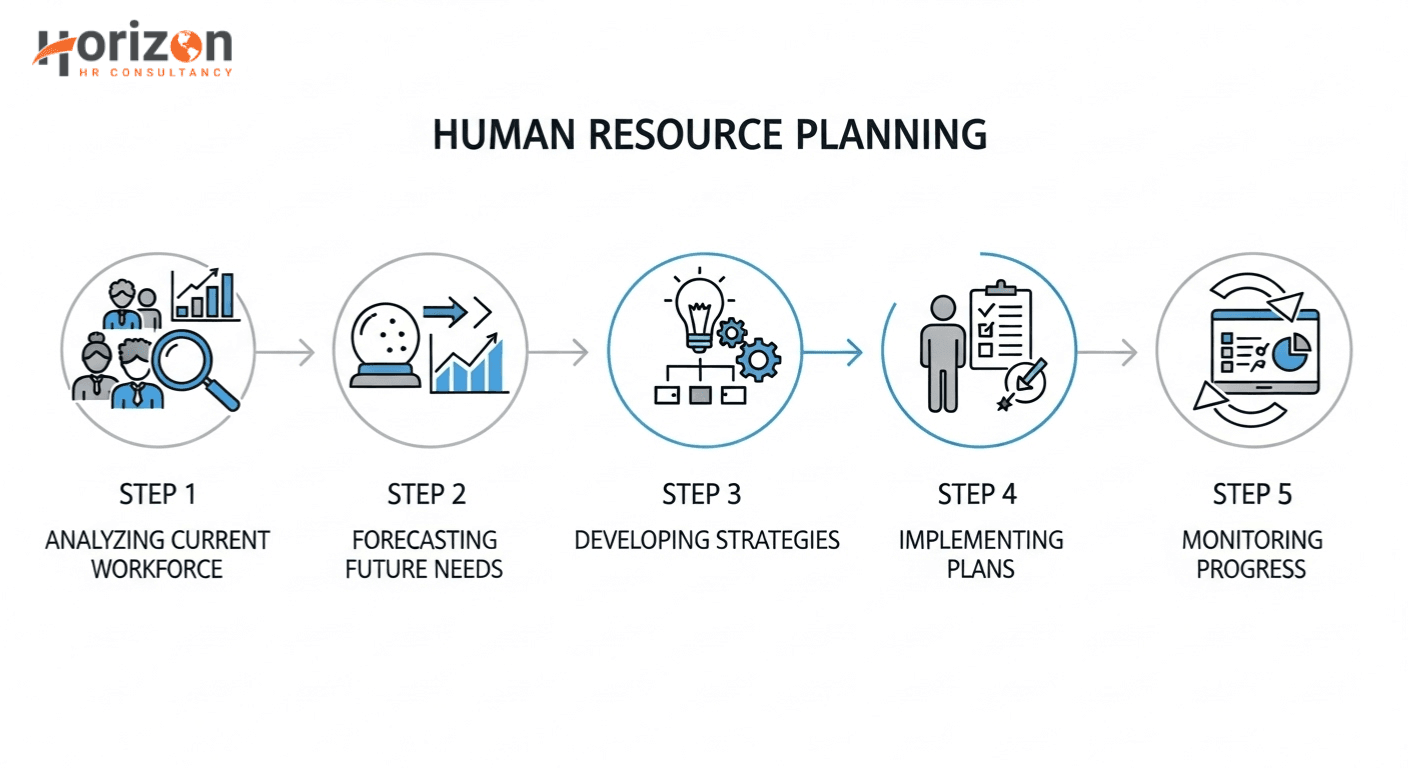
- Analyzing the organizational goals begins with understanding the objectives and goals of the organization that are to be realized over the long term.
- Subsequently, the human resource plan is designed to help accomplish the specified objectives in the stated goals.
- Demand forecasting for human resources involves the organization projecting the employee requirements as a result of anticipated organizational growth, competition, market conditions, and changes in technologies.
- Forecasting the supply of human resources involves evaluation of the current staff, employee competencies, and the availability of potential resources, talent , and competencies within and outside the organization.
- By identifying the gaps. Subsequently, strategies designed to close the gaps include recruitment, training, promotion, and transfer as well as outsourcing to augment or diminish the overall organizational human resource.
- Executing the HR strategy involves the recruitment, training, and development of employees as HR plans developed are implemented.
Evaluation and review of the HR plans is necessary to ensure that they are relevant to the organization’s dynamic changes.
Techniques Used in Human Resource Planning
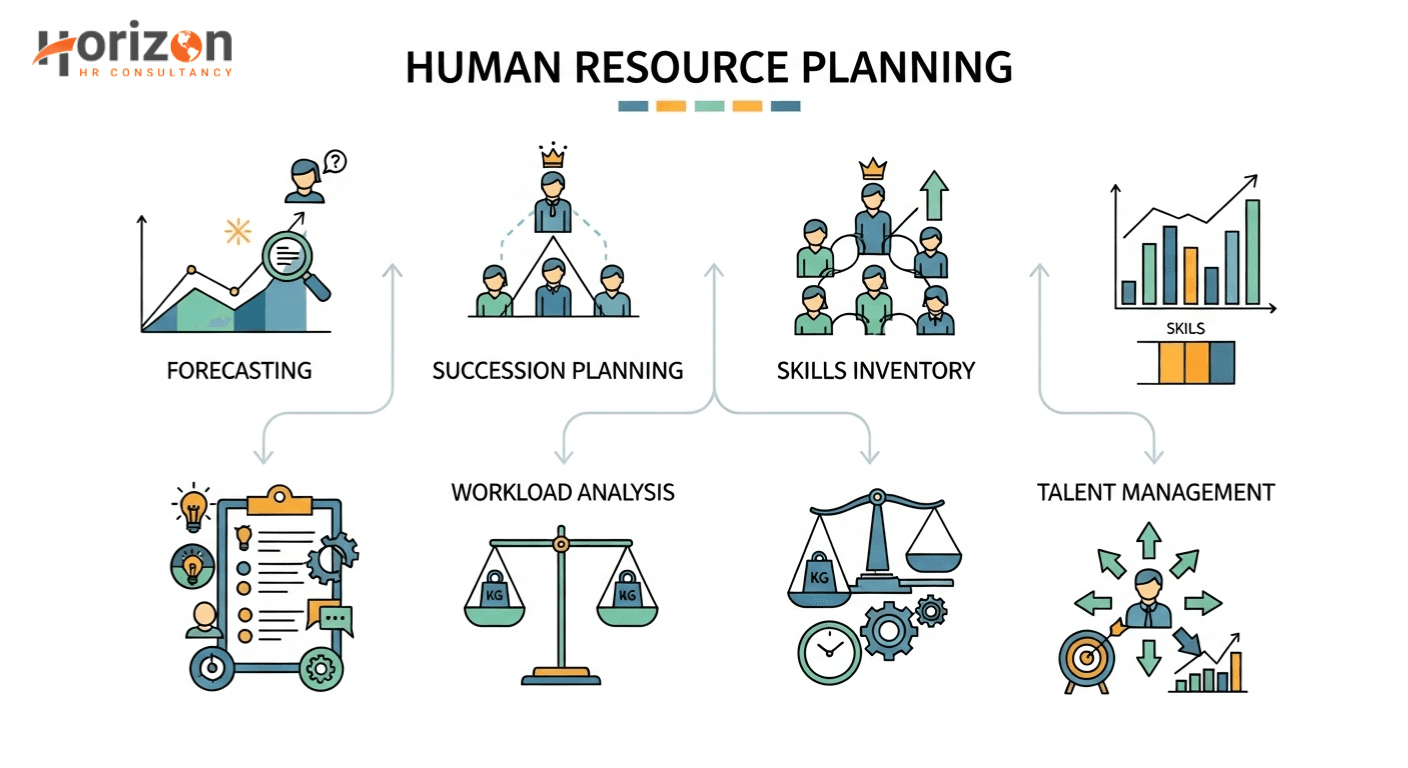
Workforce Forecasting: Predicting future workforce requirements based on historical data and market trends.
Skill Inventory: Maintaining employee skills records to determine training needs and potential succession planning.
Job Analysis: Recognizing the skills, knowledge, and abilities benchmarks for each position.
Scenario Planning: Anticipating and preparing for changes in the business environment and workforce needs.
Challenges in Human Resource Planning
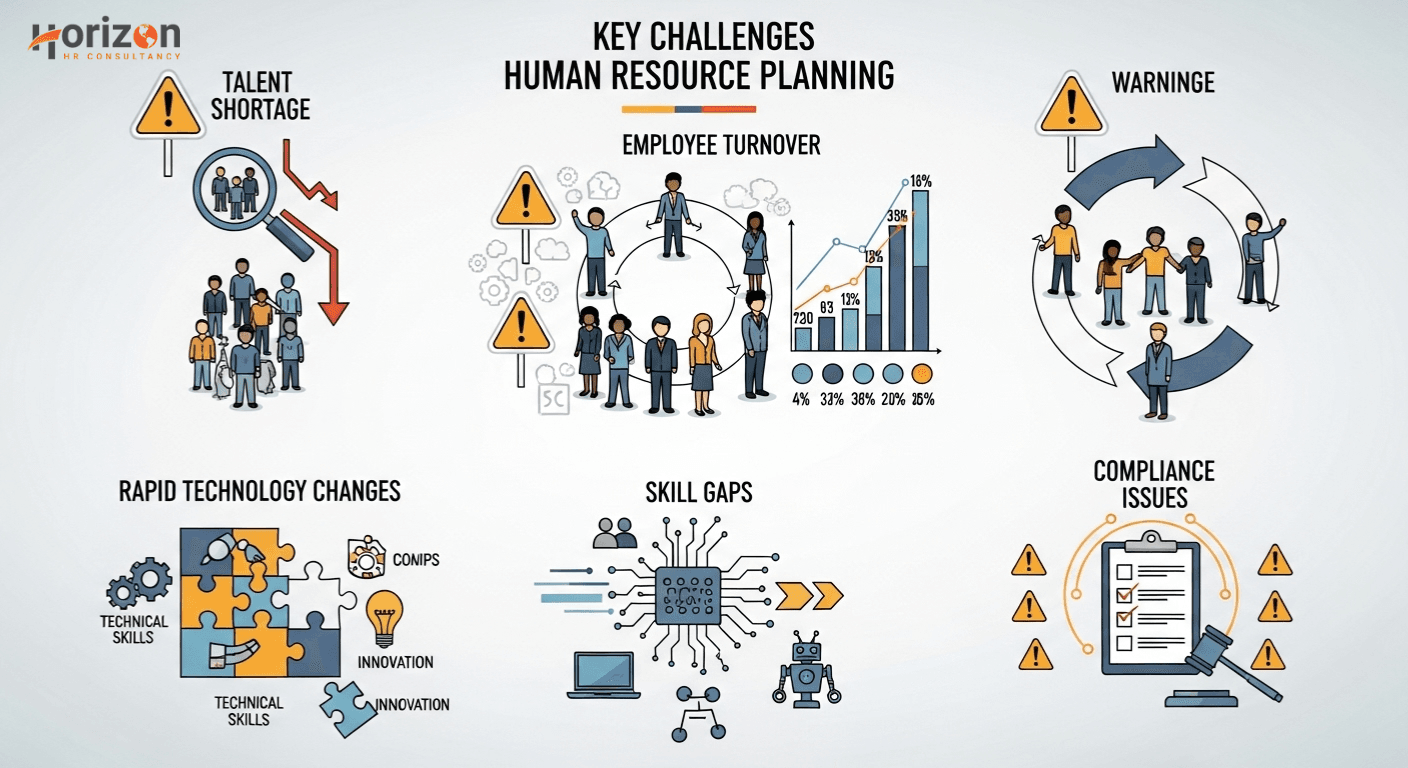
Rapid Technological Changes: Emerging technologies can make certain skills redundant thus the need for continuous learning.
Globalization: Expanding businesses requires HR plans to be adapted to different labor laws and cultural expectations.
Changing Workforce Demographics: An ageing workforce, increased diversity, and differing employee expectations require HR strategies to be more adaptable.
Economic Fluctuations: An economic downturn may result in the need to quickly revise HR Plans in anticipation of recruitment and layoffs.
Benefits of Effective Human Resource Planning
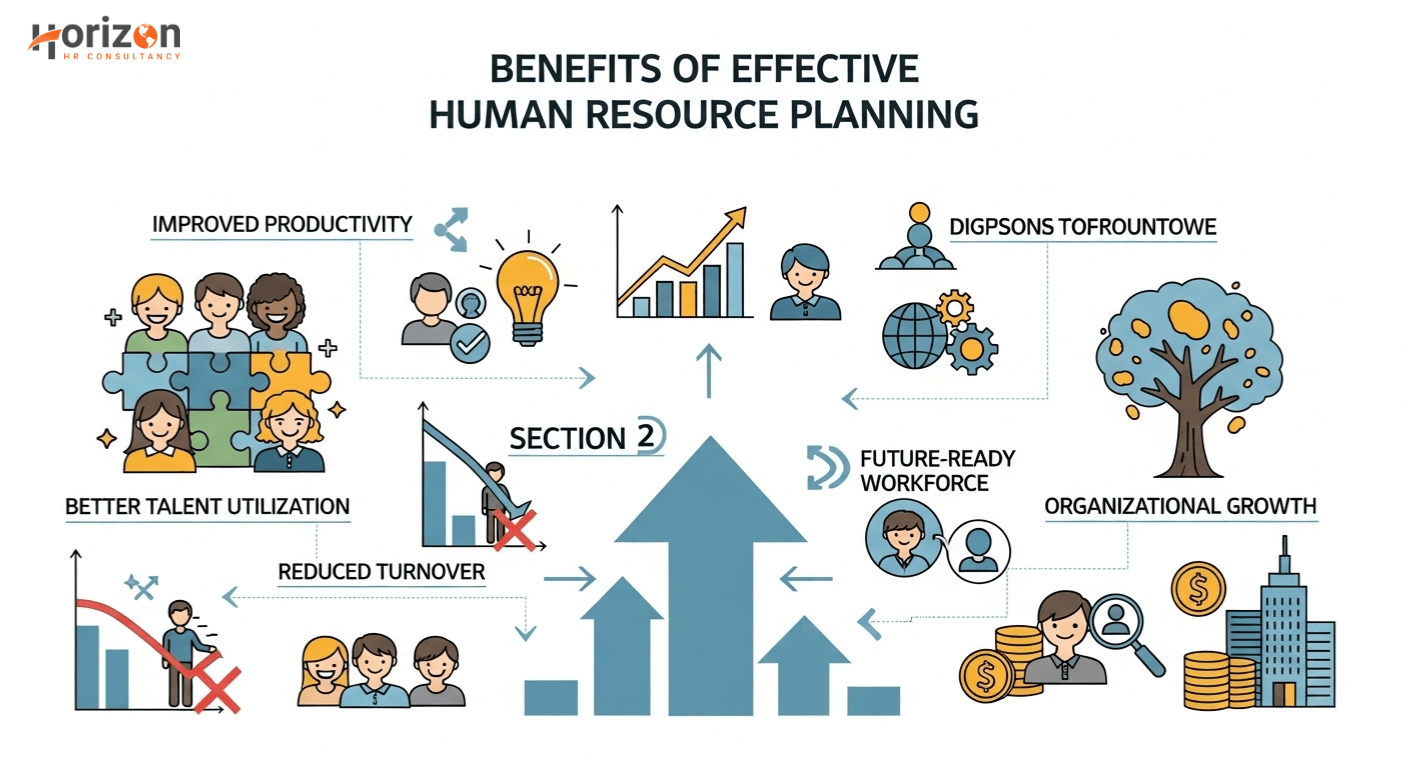
Improved Productivity: Maximum efficiency is achieved when the right people are in the right roles.
Reduced Turnover: Strategic planning increases job satisfaction which in return boosts employee retention.
Cost Efficiency: Planning lowers the costs associated with unplanned hiring, training, and turnover.
Organizational Growth: Companies can grow confidently when they have a skilled and well-planned workforce.
Conclusion
Understanding how to administer Human Resource Planning goes beyond just hiring staff to including Critical Planning which forecasts what the organization will look like in the years to come. Competent Human Resource Planning allows businesses to determine how to sustain changes, enhance employee competencies, and remain in the game. Companies that employ solid human resource planning realize the benefits of motivated staff with the necessary abilities and competencies to target long-range and strategic objectives.
In summary, human resource planning addresses all the organization’s goals and as the business environment changes. This explains why human resource planning is one of the business planning functions to aim to handle the business’s goals.
What is Human Resource Planning?
Human Resource Planning (HRP) is the anticipation of an organization’s future workforce requirements and the formulation of methods to satisfy them. It is making sure there are the right people at the right time with the right competences.
Why is Human Resource Planning important?
HRP is important because it helps organizations meet workforce demands, reduce recruitment costs, enhance employee skills, plan for succession, and align human resources with business goals.
What are the main steps in HRP?
The key elements encompass reviews of organizational goals, demand and supply forecasting for the workforce, gap identification, HR strategy creation, action plan execution, and evaluation of the outcome.
How does HRP help in employee development?
HPR wi could Identifying skill gaps and determining required training needs allows development programs meant for employees to prepare for upward mobility for future positions and promotions to be established for the organization.
What challenges are faced in Human Resource Planning?
Upheaval in economic conditions, changes in the rate of technology, globalization, shifting employee demographics and expectations, and changes in the workforce itself are all challenges.
What techniques are used in HRP?
Workforce forecasting, skill inventories, analysis of jobs and scenarios, and succession plans are the most widely used.
How does HRP improve organizational performance?
Workforce planning and scheduling improves the strategic goals of the organization in attaining them, increases productivity, minimizes turnover, lowers operational costs, and improves profitability.
Can HRP help in succession planning?
HPR plans for leaders of the future and key role players to prepare them for important positions to fill in the organization, enabling succession and continuity.
Is HRP only for large organizations?
Even microincorporated organizations or small businesses find it useful to assess HPR as it helps them in strategically planning for staffing to avoid over and under staffing.
How often should HRP be reviewed?
HPR should be continuously revised and organically adjusted to reflect business goals and the dynamics of the workforce and overall market conditions at the very least once every business calendar year.