Introduction
Human Resources is currently experiencing one of the swiftest transformations in history. The time of maintaining employee records only has passed. Organizations are turning towards a modern human resource management system to support strategy, improve employee experience, and create efficiencies. With 2026 fast approaching, it will be important for HR leaders and organizations to understand how their core HR technology and human resource management system will need to transform to support hybrid workforce models, advanced analytics, AI-driven decision-making, and global complexity. If you are in the process of upgrading or implementing a human resource management system, you will find useful information here to continue aligning your strategy for the future.
What Is a Modern Human Resource Management System?
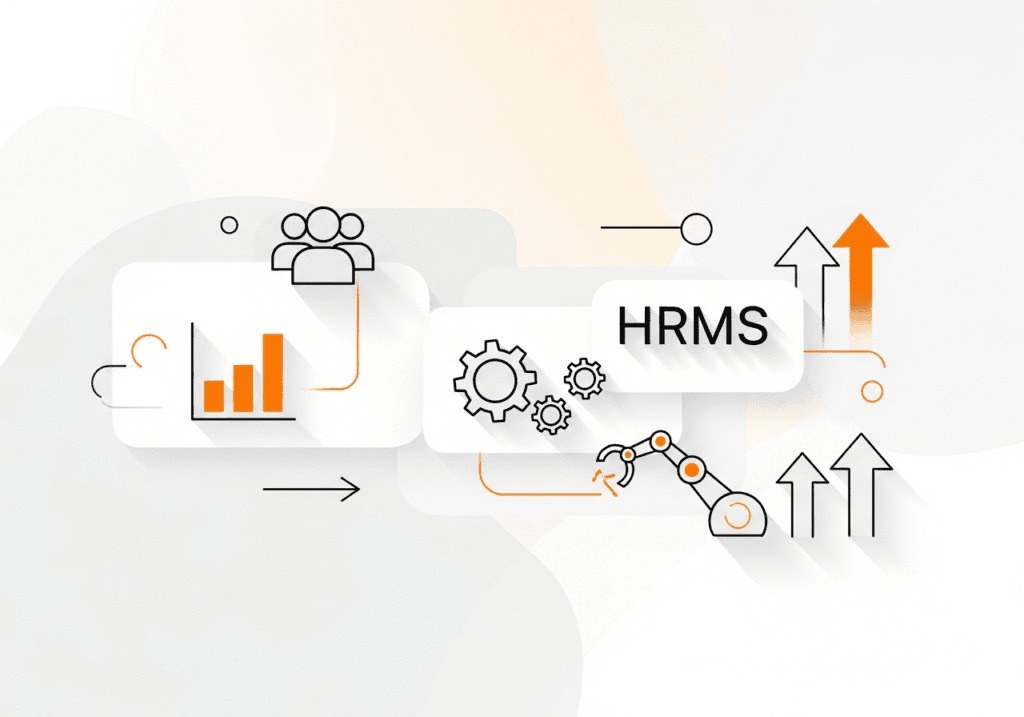
A human resource management system (HRMS) is a software platform that integrates HR functions such as payroll, recruitment, performance management, learning, employee self-service and analytics into one cohesive digital ecosystem.
Traditionally, HRIS (Human Resource Information Systems) handled only the basics: data storage and HR administration. Today, a modern human resource management system is cloud-based, modular, mobile-friendly, and geared toward delivering insights, experience and agility.
Key features typically include:
- Core HR & workforce administration
- Payroll and compensation management
- Talent acquisition and onboarding
- Performance and competency management
- Learning & development
- Employee self-service and mobile applications
- People analytics and predictive insights
In 2026, selecting the right human resource management system means prioritizing not only functionality, but adaptability, user-experience, intelligence, and global reach.
Why 2026 Is a Turning Point for HRMS
Several major forces are converging to make 2026 a pivotal year for the human resource management system:
- Artificial Intelligence and agentic automation accelerating within HR functions.
- Skills-based hiring, internal mobility and employee experience becoming central to workforce strategy.
- Remote, hybrid and global workforce models demanding more flexible, multi-modal HR platforms.
- Growing regulatory and ethical pressures around data, privacy, AI in decision-making, and employee well-being.
Because of these, the human resource management system is no longer a back-office tool it’s now a strategic enabler of workforce agility, people analytics and business performance.
Major Ways HRMS Are Evolving in 2026
AI & Automation Beyond the Basics
In 2026, the human resource management system is embedding what experts call “agentic AI” systems capable of autonomous, multi-step processes, beyond simple automation.
This means your HRMS may:
- Suggest and even initiate recruitment campaigns based on predicted talent needs
- Forecast attrition and recommend retention strategies
- Automate advanced workforce planning and scheduling decisions
- Provide chatbots that handle onboarding, queries and even employee development tasks
These capabilities place the human resource management system at the heart of both operational efficiency and strategic workforce planning.
Skills-Based Hiring & Internal Talent Mobility
The shift from looking at degrees and job titles to skills and competencies is well underway.
An evolved human resource management system will support:
- Skills inventories and mapping
- Internal talent marketplaces so employees can move laterally or vertically
- Learning recommendations based on skills gaps
- Recruitment processes that match skills, not just roles
By leveraging a modern HRMS, organizations can build more flexible, resilient workforces and reduce time-to-hire while maximizing internal mobility.
Employee Experience, Self-Service & Mobility
Today’s workforce expects seamless, mobile-first, personalised experiences. A human resource management system that fails to deliver on self-service or mobile usability risks falling behind.
In 2026, look for HRMS platforms offering:
- Employee and manager portals accessible via mobile
- Real-time feedback, continuous listening and pulse surveys
- Personalised dashboards, learning journeys, and transparent HR communication
- Support for hybrid & remote workflows, enabling employees to work from anywhere
By enhancing employee experience through HR technology, the human resource management system becomes a key contributor to retention, engagement and productivity.
Advanced Analytics & Predictive Workforce Planning
Data-driven HR is shifting from descriptive to predictive and prescriptive insights. Best-in-class human resource management systems now incorporate:
- People analytics dashboards showing engagement, performance, retention, etc.
- Predictive models forecasting turnover, skills gaps, and workforce supply/demand
- Integration with business-outcome systems to correlate HR metrics with revenue, productivity and customer outcomes
These capabilities transform the HRMS into a strategic decision-support engine for leadership.
Compliance, Ethics & Transparent AI Governance
With the increasing use of AI in HR decisions comes heightened regulatory and ethical scrutiny.
Features in a future-ready human resource management system include:
- Audit trails and data governance controls
- Transparent algorithms and explainable AI
- Role-based access, privacy safeguards and global compliance support
- Ethics frameworks ensuring fairness in recruitment, performance evaluation and development
These ensure the HRMS is not just powerful—but also responsible and trustworthy.
Global Workforce & Multi-Modal Support
As companies scale globally and adopt hybrid, remote and gig models, your human resource management system must keep pace.
Key features include:
- Multi-country payroll and localisation support (currencies, languages, local regulations)
- Scheduling and workforce management across time zones and distributed teams
- Integrations with contractor/gig platforms and global talent marketplaces
- Ability to scale rapidly and integrate with other business systems
This flexibility ensures the HRMS supports global growth and the future of work.
Key Challenges and Risks for HRMS Evolution
Despite all the promise, evolving your human resource management system comes with real challenges:
- Legacy system integration: Many organizations struggle with migrating old HRIS platforms to modern HRMS.
- Change management: Getting HR, employees and managers to adopt new processes and tools can be difficult.
- Skills gaps: HR teams may lack analytics, AI or digital capabilities, limiting the impact of the new system.
- Data quality and governance: Predictive analytics require clean, integrated data—and that’s often missing.
- Ethical/trust issues: Employees’ concerns about AI bias, transparency, job security and privacy must be addressed.
Understanding these risks lets you plan for them proactively when selecting or upgrading your human resource management system.
Best Practices for Selecting and Implementing a Future-Ready HRMS
When you’re ready to move forward with a new human resource management system, these guidelines will help ensure success:
- Align with your business strategy & HR maturity: Assess where you are now and what you need going forward.
- Choose scalable, modular and cloud-native platforms that can adapt as your organization grows.
- Prioritise user experience: The adoption of HRMS often fails due to poor UX—ensure mobile, intuitive, self-service design.
- Ensure AI & analytics readiness: Look for built-in analytics, predictions and machine learning capabilities.
- Focus on skills and internal mobility: Ensure the system supports skills mapping, talent marketplaces and learning journeys.
- Build change-management plans: Train HR teams, managers and employees; communicate benefits; monitor adoption.
- Track ROI via key metrics: Time-to-hire, retention rate, engagement scores, productivity, cost per hire, etc.
- Partner with experts: For those implementing this for the first time, partnering with a consultancy can accelerate success. For example, visit Horizon HR Consultancy at horizonhrconsultancy.in for tailored support.
By following these steps, your human resource management system initiative will be better positioned for performance, adoption and long-term value.
Future Outlook Beyond 2026
Looking ahead, the evolution of the human resource management system will bring even more radical changes:
- Fully autonomous HR workflows which integrate AI agents, human-machine collaboration and continuous optimization.
- Hyper-personalised employee journeys where each worker receives tailored development, roles and career paths.
- Predictive sandboxing of workforce scenarios
- Increased convergence between HR systems and broader enterprise platforms (ERP, CRM, supply-chain), making the human resource management system part of the real-time business engine.
The investments you make now will define not just your HR operations, but your organization’s agility, talent competitiveness and growth capability in the coming decade.
Conclusion
In 2026, we are seeing a change in human resource management systems and how HR is done starting and using AI automation, skills based hiring, enhanced employee experience and advanced analytics. Organizations must invest in upgrading their HRMS today for competitive advantage and future-proofing.
For expert assistance to select or implement an HRMS model, visit Horizon HR Consultancy and elevate your HR strategy.
What is a human resource management system (HRMS)?
It is a technology platform that unifies HR operations, talent management, payroll, learning, analytics and employee experience into one digital ecosystem.
Why are HRMS systems evolving so rapidly in 2026?
Because of rising demands from hybrid work, AI, analytics, skills-based talent models and global workforce complexity.
How does AI improve a human resource management system?
AI enables automation of complex tasks, predictive analytics for talent and workforce planning, personalised employee journeys and smarter HR decisions.
Can small businesses use a modern human resource management system?
Yes — many modern HRMS platforms offer scalable, modular solutions suitable for SMEs, enabling them to compete with larger organizations.
How do I choose a future-ready human resource management system?
Look for platforms that offer AI & analytics, skills-based talent support, mobile usability, self-service, global/local capabilities, and a strong partner ecosystem.